
Murray Warehouse & Industrial Space for Lease
Murray holds 360+ industrial and flex properties, most of them along the Cottonwood Street corridor just south of 4500 South. That puts the whole submarket mid-valley, right on I-15 and State Street. Tenants touring Murray for the first time usually ask why so much small-bay product ended up in one pocket, and that location is the answer: if you need to serve customers on both ends of the valley from one building, this is where you look.
What a building rents for here turns on where it sits in the corridor, how old it is, whether it has dock access, and what condition it's in. The Murray name on the map moves the number far less than any of those. Tell me what you need and where, and I'll tell you where that kind of building is pricing. Current Murray availability is on the live listings, and a read on your specific building is a quick call.
What kind of industrial submarket Murray is
Older small-bay infill in the geographic middle of the valley, between South Salt Lake to the north and Midvale to the south, with I-15 on the east edge. The name says Murray. The inventory is mostly the unincorporated belt to the west.
The composition is consistent. Median building dates to 1984 with a heavy pre-1980 layer under it. Median footprint runs about 8,830 SF, one of the smallest medians in the valley. Class C is roughly 70% of the stock, and a single Class A building exists in the entire submarket. More than 85% of buildings have no dock and no drive-in. Property type runs about 85% industrial and 14% flex.
The mistake people make is the name. Walk in expecting the Murray retail strip on State Street or Murray-proper addresses, and you'll find almost none of it. The real inventory is the local-trade belt to the west: contractors, small distributors, service operators, light industrial. It shares a city name with the retail corridor and not much else.
Why the East Murray corridor works for small-bay users
Central position. The corridor sits at the middle of the metro. From most East Murray addresses you're inside fifteen minutes of downtown, twenty of the airport, thirty of any south-valley submarket. If your customers are spread across the valley instead of bunched in one quadrant, the middle beats committing to an edge.
Small-bay density. Inventory concentrates under 10,000 SF and under 25,000 SF, the scale a local-trade operator can finance and, in a lot of cases, buy outright. The median footprint sits among the smallest in the valley, and that's a feature for an owner-user who wants their own building at a size that pencils.
Freeway and surface access. I-15 runs the east edge with interchanges at 4500 South, 5300 South, and 6200 South. Surface arterials carry east into the central-valley population and west toward the West Valley industrial belt. For freight that moves inside the metro, the geometry works.
What the corridor does not have is modern logistics specs, big-box footprints, or Class A product. If you need any of those, you need a different submarket, and I'll tell you that on the first call instead of touring you through buildings that don't fit.
The building stock in the Murray submarket
Overwhelmingly older small-bay, with thin overlays of mid-size and almost nothing modern.
Vintage skews pre-2000. Roughly 40% of buildings predate 1980, another 40% land in the 1980s and 1990s, and about 19% are post-2000, nearly all of that from the 2000s and 2010s. One building has delivered from 2020 on. The inventory isn't growing. It's stable to slightly shrinking.
Size is the second fact. Median under 9,000 SF, more than half under 10,000 SF, better than 90% under 25,000 SF. Over 50,000 SF is uncommon. Over 100,000 SF is essentially absent, so the submarket structurally can't hold a large-format requirement.
Class C runs about 70%, Class B about 27%, and Class A is a single building. Clear heights here run roughly 12 to 22 feet, with the typical building in the mid-teens. The buildings that carry docks are older mid-size single-tenant industrial with single-digit dock counts from an earlier logistics era.
The densest small-bay cluster sits between 4500 South and 5300 South west of I-15. A second pocket of mixed older industrial and infill flex runs from 5800 South to 6200 South, and a smaller, distinct set of buildings sits along Murray's western edge, the piece that actually is inside city limits.
Who owns and develops industrial property in Murray
Private and operator-side, with one concentration that stands out. Ralph W Kramer Construction and an affiliated holding control 32 buildings between them, the most concentrated single private ownership in this submarket. That's a clustered family holding, not institutional capital, and it shapes how a real share of the leasing and sale activity moves. Below it, the leaderboard runs to private investors and small operator-owners holding three or four buildings each.
New development effectively doesn't happen here. There is no named developer on almost any of it. The parcels are small and the land economics don't support modern big-box construction, so the handful of post-2020 buildings are one-offs.
For a tenant, ownership matters more here than in a submarket where it's dispersed. Know who holds the building before you make an ask, because a meaningful share of the corridor flows through one group. For an investor, the bid pool is private and operator-side, and recent sales lean owner-user over investment. This is an operator's market, and a value-add exit here is usually another operator, not a REIT.
How new supply gets delivered in Murray
It mostly doesn't. New construction has been minimal for two decades, and the few recent deliveries are small one-off buildings. Same structural story as Downtown and South Salt Lake: built out at older vintage, parcels too small for scale, slow contraction as pieces get demolished or converted.
So supply isn't a variable you time here. There's no pipeline and no delivery wave. Product hits the market when a long-time owner exits, a family operator winds down, or a piece of the Kramer holding comes free. Plan a longer search and be ready to move when the right building surfaces, because it won't follow a developer's calendar.
Murray industrial product types compared
| Product type | Typical tenant / use | Building profile | Clear height | Rent tier |
|---|---|---|---|---|
| Big box / bulk | No modern big box; older small-format urban distribution and local service | Almost all under 25K SF; grade-level loading common | Below 22 ft across most of the stock | Lowest $/SF |
| Specialized industrial | Light manufacturing, contractors & trades, fabrication, local distribution | Mid-size single or multi-tenant, older construction | 16 to 22 ft | Mid |
| Flex | Office-heavy users, contractors, services, light assembly | Smaller bays, higher finish, more parking | 12 to 18 ft | Highest $/SF |
What I'd tell you before you lease or buy here
Tenants: the threshold question is whether central-valley geography and small-bay scale fit your operation. Contractor, small distributor, service operator, or light industrial under 25,000 SF with customers across the metro, the corridor fits and prices friendlier than South Salt Lake right above it. Need modern specs, a bigger footprint, or retail visibility, and it won't. Don't confuse the name with the geography.
Owners: your edge is the central location and the small-bay density. Your competition is other small private owners and, for a chunk of the submarket, the Kramer portfolio. Don't price older Class C like it competes with modern logistics elsewhere, because it doesn't, and it'll sit. Sell the fast, flexible, close-in deal the big parks can't do.
Investors: sales here skew more owner-user than any other submarket in the valley, which tells you the transaction reality before any number does. The stabilized-investment bid pool is thinner than in deeper submarkets, and the exit on a value-add play is usually an operator-user. Your cap rate depends on the specific building and how it's leased, and the debt market moves it further. Send me the address and I'll tell you where that deal prices today. Call me.
Murray industrial submarket: common questions
How does Murray industrial rent compare to other Salt Lake submarkets? For the older small-bay product it runs in line with or below the metro blended per foot. Against South Salt Lake right to the north, Murray usually prices a little lower, because the inventory is similar but the urban-adjacent premium that lifts South Salt Lake is softer here. Against Sandy, it's a similar tier on older vintage and smaller bays. Current availability is on the live listings. Call me with the address.
What clear heights do warehouses in Murray have? Twelve to 22 feet on the typical building. Older small-bay sits in the mid-teens, and the mid-size 1980s and 1990s product reaches the low 20s. Modern 32-foot clear effectively doesn't exist here, and the building's vintage tells you that before you tour it.
Is Murray a good submarket for distribution or 3PL? For modern regional distribution or 3PL, no. The stock doesn't carry the specs or the footprints. For local distribution, urban-adjacent service, and contractor operations that need central access at small-bay scale, it works, because the geography is genuinely central and the inventory is deep at the sizes those users need.
What size spaces does Murray have? Almost everything under 25,000 SF, more than half under 10,000 SF. Between 25,000 and 50,000 SF is uncommon. Over 50,000 SF is rare, and over that you should be looking elsewhere.
How does Murray compare to Midvale, South Salt Lake, and Sandy? Midvale, the immediate southern neighbor, runs a touch older (median 1982) with zero Class A and ownership spread across roughly 126 private owners. South Salt Lake sits right north and runs older urban-adjacent infill at similar small-bay character. Sandy is further south and east on newer vintage with the thin layer of Class A that Murray lacks. See all Salt Lake Valley submarkets.
What does industrial space in Murray cost to lease or buy? It tracks the specific building. A pre-1980 grade-level bay out in the East Murray belt west of I-15 reads nothing like a renovated mid-size building near the city line, and buyers who price the whole corridor on Murray-city retail economics get it wrong. Vintage, dock access, and condition set the number. Give me the spec and I'll show you where that building is trending and what's open: current listings or call me.
Is there warehouse space for rent near me in Murray? Yes, and it is concentrated in one place. Murray holds 360+ industrial and flex properties, most of them along the Cottonwood Street corridor just south of 4500 South, which puts a near-me search here right on I-15 and State Street. Almost everything is under 25,000 SF and more than half under 10,000. Current Murray listings show what is open.
Have a requirement or a building in the East Murray corridor? Call me and I'll tell you what it's worth and which side of the corridor it's really on. Contact Colter
Colter Smith, CRES Utah · saltlakewarehouses.com
By Colter Smith, Commercial Real Estate Agent · CRES Utah
Available Space in Murray
0 listings available now
Current asks in Murray: $1.15 per SF per month, from the live CRES listings on this page, July 2026.
Every current Murray match is a brokerage listing from another CRE Specialists agent, below.
More CRES Industrial Listings
Industrial and flex listings from other CRE Specialists agents. Each inquiry goes directly to the listing agent.
The broker's read
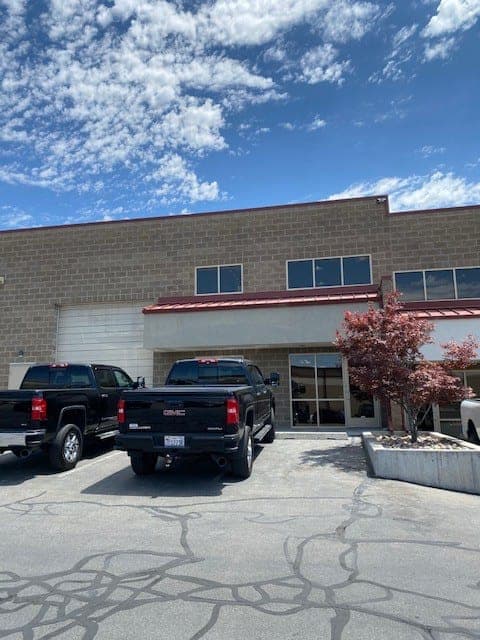
July 2026Murray splits at the freeway. The west side is the working industrial core, where existing small and specialized product is essentially full and the only vacancy lives in newly delivered space still leasing up. The east side is built-out small parcels that almost never trade or come available. Our 6537 Cottonwood listing sits in the middle of the deepest small-bay density in the valley, and the phone activity on it tells you what this corridor is: more demand than product.
By Colter Smith, Commercial Real Estate Agent · CRES Utah
Licensed Utah real estate agent, UT Lic. #12359735-SA00. About Colter
Own property in Murray?
Get a free broker opinion of value. No listing required. We'll tell you what your property is worth in today's market.
Get a Free ValuationLooking for space in Murray?
Browse all available listings, filtered and ready. Or tell us your requirements and we'll source off-market options.
Browse Available Listings