
Midvale Warehouse & Industrial Space for Lease
Midvale is the only industrial submarket in the Salt Lake Valley with zero Class A buildings, and it's the most exclusively private and owner-occupied. There are 173 buildings here, and 173 sit in private hands: 126 distinct owners, not one institutional name among them. Add the early-1980s median vintage and the 11,000 SF median footprint, and you get a combination no other submarket in the valley repeats. Old, small-bay, and almost entirely owner-held.
What a building rents for here is set by its condition, how it's demised, and who owns it. There are 126 private owners in Midvale and not a single institution, so who sits across the table shapes the deal as much as the specs do. Bring me the spec and I'll tell you what that kind of building is doing right now. Current Midvale availability is on the live listings, and a read on your specific building is a quick call.
What kind of industrial submarket Midvale is
Older small-bay stock on the I-15 spine, between Murray to the north and Sandy to the south, with TRAX running the middle of it. The conventional submarket map scatters Midvale's buildings across the Sandy and East Murray boundaries, so this page pulls the Midvale-proper inventory back together: 173 buildings.
The numbers point the same direction from every angle. Median building dates to 1982, and more than two in five predate 1980. Median footprint is 11,000 SF, with better than 40% under 10,000 SF. Zero Class A. Eight of ten buildings have no dock and no drive-in. By asset value, owner-occupants and private owners hold essentially the entire submarket, and institutional capital owns about 2%.
The mistake here is treating Midvale like Sandy or a south-end logistics corridor. Sandy carries a thin layer of Class A and a newer vintage. Midvale carries neither. It serves a specific economy: local trades, small wholesalers, contractors, and small-bay flex users who want the central-south valley at older-product pricing. The central I-15 position is the durable advantage. The stock is what it is, and a tenant who needs modern specs won't find them here on any reasonable timeline.
Why the Midvale corridor works for local trades and small-bay users
Central geography. Midvale sits on I-15 between Murray to the north and Sandy to the south, and the 7200 South and 7800 South interchanges put you inside ten minutes of most south-end population centers. For an operator who runs south-central but also pulls from north of Murray, the middle beats either end.
Pricing-friendly older stock. Because the inventory is older, smaller, and mostly Class C, the entry point per foot generally runs the lowest in this part of the valley for comparable product. If you don't need 32-foot clear or ESFR but you need an affordable address inside the metro core, Midvale delivers it.
TRAX and labor. TRAX runs the spine parallel to State Street, and the corridor pulls workforce from a dense radius. For an employee-heavy flex operation that benefits from rail access, that's a real draw, and part of why Midvale carries a higher flex share than the south-end logistics corridors.
What Midvale does not offer is big-box parcels or Class A product. If you need them, this corridor is the wrong fit, and I'll say so early.
The building stock in the Midvale submarket
Older, smaller, and less spec'd-up than most of the valley.
Vintage is the load-bearing fact. More than two in five buildings predate 1980, roughly another third date to the 1980s and 1990s, and the 2000-and-newer stock is real but not dominant. That pre-1980 share is what separates Midvale from Sandy proper, where pre-1980 stock is closer to one in seven.
Median footprint is 11,000 SF, with better than 40% under 10,000 SF. Buildings over 50,000 SF are rare, single digits across the whole submarket, and over 100,000 SF is essentially absent.
Class C is the modal grade at roughly two-thirds of the rated stock, Class B fills most of the rest, and there are zero Class A buildings. Every other submarket in the valley carries at least some. Midvale carries none. Clear heights here run 15 to 20 feet, and eight of ten buildings have neither dock nor drive-in.
The older small-bay inventory clusters around historic Midvale near State Street and Center Street, along the 700 West frontage south of 7200 South, and on the spurs off I-15 between 7200 South and 7800 South. The few newer buildings sit toward the south edge near the Sandy boundary.
Who owns and develops industrial property in Midvale
Ownership is the most distinguishing fact about Midvale. There are 126 distinct owners across 173 buildings, and not one is institutional. By asset value, owner-occupants hold about 56% and private investors about 42%, leaving institutional capital near 2%. The top owners are private commercial investors and individual operators (Perry Commercial, ARKA Properties Group, and Olympus Contractors each hold five to ten buildings; UDOT shows up as a quasi-public holder). Nothing on that list is institutional in the way Link Logistics or Scannell dominate the Airport corridor.
Development happens one building at a time, on whatever infill land is left. Recent deliveries are small one-offs, not park development. The 12-month pipeline is essentially zero, nothing is under construction, and the 10-year growth trajectory is flat.
For a tenant, that means you're often dealing directly with the owner, and the flexibility that comes with a private landlord is real. For an investor, this is a private and operator-side market: no institutional product to compete for, no large stabilized assets, no concentrated landlord roster to align with.
How new supply gets delivered in Midvale
It doesn't, and that's structural, not a phase of the cycle. The 10-year pattern runs flat to slightly negative as a handful of buildings get demolished, repurposed, or absorbed into adjacent commercial use. There's no master-planned park in the queue, and the developable land that would support new industrial is functionally gone.
This is the strongest version of supply-constraint in the valley. Sandy is tight but still delivers the occasional one-off building. Midvale doesn't even do that. Product comes to market when an owner-occupant moves or a small landlord lists, period. Plan a multi-month search, be ready for an unlisted opportunity, and don't underwrite on new supply showing up to relieve rents. It won't.
Midvale industrial product types compared
| Product type | Typical tenant / use | Building profile | Clear height | Rent tier |
|---|---|---|---|---|
| Big box / bulk | No modern big box; older small-format distribution-adjacent uses fill the role | Almost all under 25K SF; grade-level loading common | Below modern logistics specs across nearly all stock | Lowest $/SF |
| Specialized industrial | Local manufacturing, light processing, contractors, owner-users | Mid-size single or small multi-tenant, older construction | 18 to 22 ft | Mid |
| Flex | Office-heavy users, light assembly, showroom & service, TRAX-adjacent operations | Smaller bays, higher finish, more parking | 14 to 18 ft | Highest $/SF |
What I'd tell you before you lease or buy here
Tenants: ask first whether your requirement fits older small-bay product. Need modern clear heights, modern dock counts, or a building over 50,000 SF, and Midvale isn't your submarket, because that inventory doesn't exist here. Contractor serving the south-central valley, local trade, small wholesaler, owner-user under 25,000 SF, or a flex tenant who values TRAX and central I-15 geography, and it's a legitimate fit at pricing friendlier than its better-known neighbors. Plan a longer search than you would in a deeper submarket.
Owners: your edge is that no supply pipeline is coming to undercut you, and the land constraints mean what's here is what there will be. Your competition is other small private owners, so you differentiate on condition, parking, signage, and demising flexibility. Don't price like institutional product. Sell what small private ownership does well: faster decisions, more room on TI, deals a corporate landlord's template won't allow.
Investors: this is an owner-occupant submarket where the typical building rarely trades, and stock this age and size prices on condition and lease structure far more than on the Midvale label. Ownership is overwhelmingly private, the institutional buyer pool is essentially absent, and a value-add play exits to a private investor or operator, not a national REIT. Financing terms move the number too. Tell me the asset you're weighing and I'll tell you where it's pricing today. Call me.
Midvale industrial submarket: common questions
How does Midvale industrial rent compare to other Salt Lake submarkets? It generally runs below the metro blended per foot, because the inventory is older, smaller, and lower-class on average. The blended number hides what matters. Against Sandy proper at the same product type, Midvale tends to come in a little cheaper on the older vintage. Against South Salt Lake, it runs in a similar range, with geography driving most of the difference for the user. What's on the market now is on the live listings, or call me with the size and condition.
What clear heights do warehouses in Midvale have? Most run 15 to 20 feet. The pre-1980 small-bay product sits in the mid-to-high teens, and a handful of newer buildings reach the low 20s. If you need 24-foot clear or higher, Midvale will disappoint you, and 32-foot modern logistics clear is essentially not here at all.
Is Midvale a good submarket for distribution or 3PL? Not for modern distribution or 3PL. The inventory doesn't carry the big-box product, dock count, or trailer parking those operations need. Local service distribution serving the south-central valley works. Regional distribution out of Salt Lake is the wrong use case for this corridor. For modern logistics specs, look at Airport, West Valley, West Jordan, or the Bluffdale corridor.
What size spaces does Midvale have? Nearly all of it is under 25,000 SF, with the majority under 15,000 SF. Between 25,000 and 50,000 SF is uncommon, over 50,000 SF is rare, and over 100,000 SF is essentially absent. If your requirement runs over 25,000 SF the pool gets thin, and over 50,000 SF it's largely outside this submarket.
How does Midvale compare to Sandy, Murray, and South Salt Lake? Sandy, the immediate southern neighbor, runs newer on average and carries a thin layer of Class A that Midvale lacks entirely. Murray, the East Murray belt just north, runs similar small-bay character on a close vintage, but its ownership concentrates in one dominant holder while Midvale spreads across 126. South Salt Lake sits farther north on the I-15 corridor south of downtown and runs similar character at a larger overall count. See all Salt Lake Valley submarkets.
What does industrial space in Midvale cost to lease or buy? It rides on the building's specifics. Median vintage here is 1982 and the median footprint 11,000 SF, so an older sub-10,000 SF bay with no dock and a demised flex suite with newer finish don't price the same, and Midvale has zero Class A to reset the top of the range. Whether you're dealing with an operator or a small investor moves the terms too. Tell me the size and condition and I'll tell you where it sits today, plus what's on the market: current listings or run the numbers with me.
Is there warehouse space for rent near me in Midvale? Yes, and it is one of the better small-bay searches in the valley. All 173 buildings here sit in private hands across 126 distinct owners, and nearly everything is under 25,000 SF with the majority under 15,000. That ownership spread is why deals here get done building by building rather than off a leasing sheet. Over 25,000 SF the pool thins fast. Start with current listings and tell me the size you need.
Have a requirement or a building in the Midvale corridor? Call me and I'll tell you what the building is worth and who you'll be negotiating with. Contact Colter
Colter Smith, CRES Utah · saltlakewarehouses.com
By Colter Smith, Commercial Real Estate Agent · CRES Utah
Available Space in Midvale
0 listings available now
Current asks in Midvale: $1.15 to $2.54 per SF per month, from the live CRES listings on this page, September 2026.
Every current Midvale match is a brokerage listing from another CRE Specialists agent, below.
More CRES Industrial Listings
Industrial and flex listings from other CRE Specialists agents. Each inquiry goes directly to the listing agent.
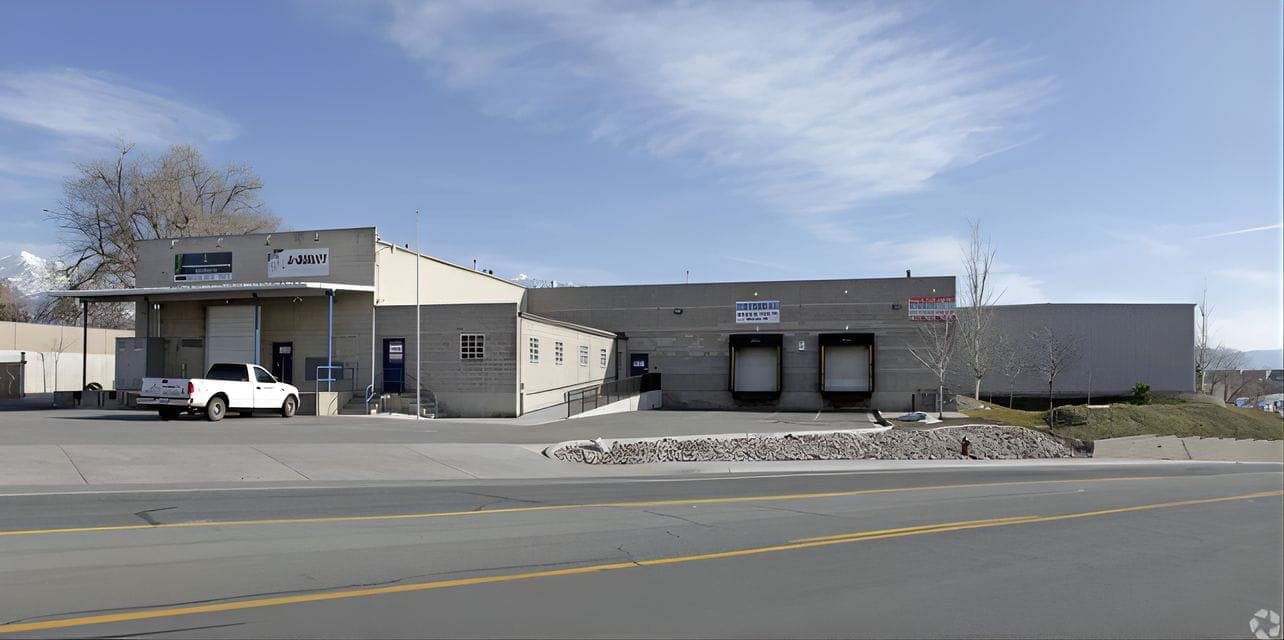
Warehouse with Cooler for Lease: 8315 S Main St, Unit 1, Midvale
Midvale, UT
Listed/Updated September 2026
Listed by Justin Welch, CRE Specialists
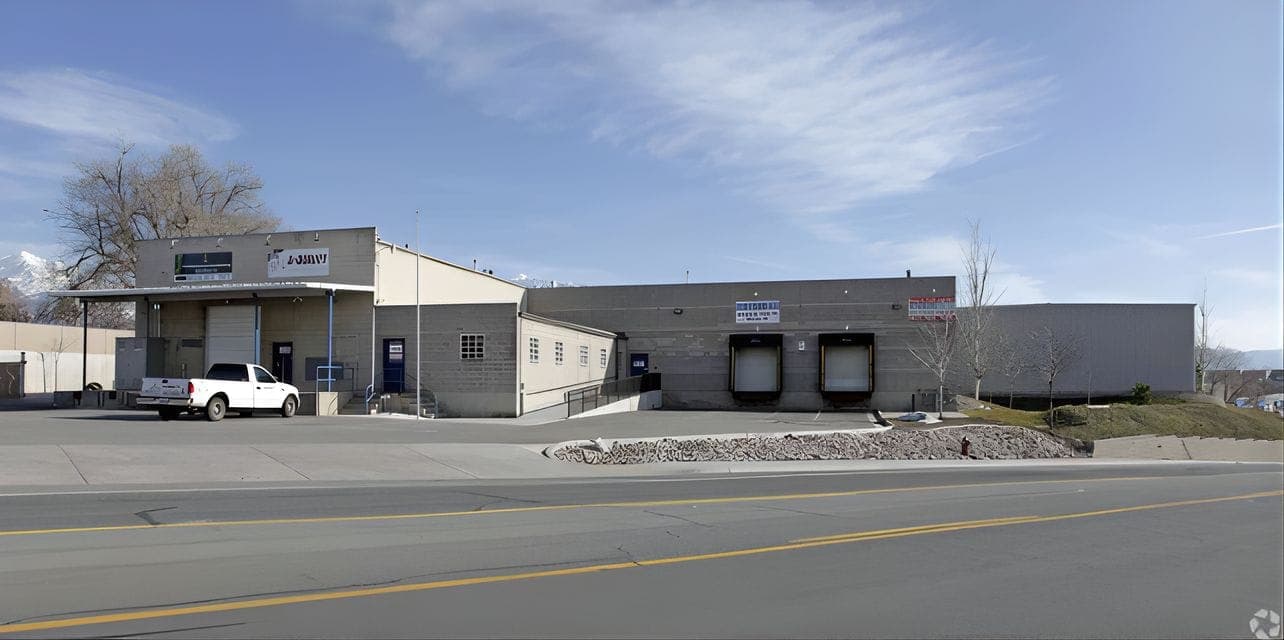
Cold Storage for Lease: 8315 S Main St, Unit 2, Midvale
Midvale, UT
Listed/Updated September 2026
Listed by Justin Welch, CRE Specialists
The broker's read
July 2026Midvale is the connector between Murray's small-bay core and Sandy's tight south-end market, and it behaves like both neighbors: older small-bay product, no new supply, steady demand from trades and service businesses that need to reach the whole south valley. Spaces here rarely make it to a second week of tours. If your search covers Midvale, it should probably cover Murray and Sandy too, and the nearby submarket pages carry the same live inventory.
By Colter Smith, Commercial Real Estate Agent · CRES Utah
Licensed Utah real estate agent, UT Lic. #12359735-SA00. About Colter
Own property in Midvale?
Get a free broker opinion of value. No listing required. We'll tell you what your property is worth in today's market.
Get a Free ValuationLooking for space in Midvale?
Browse all available listings, filtered and ready. Or tell us your requirements and we'll source off-market options.
Browse Available Listings