
Salt Lake Downtown Warehouse & Industrial Space for Lease
The Downtown industrial submarket covers the old industrial and freight inventory inside the Salt Lake City core, mostly west of State Street through the Granary District and Pioneer Park, with pockets running into the West Temple corridor and the older blocks south of the central business district. This is not where Salt Lake does modern warehousing or regional distribution. The stock predates that economy by decades: the median building dates to about 1963, and more than four in five predate 1980. If you're shopping Downtown expecting warehouse specs, you're in the wrong submarket.
Downtown is the converted-use, urban-adjacent flex submarket of Salt Lake City. The structural facts are below. Rent here follows finish and use, not warehouse specs. Most of this stock has no dock, so what the space has been converted into sets the number. Tell me the use and I'll tell you where it's pricing. Current availability is on the live listings, or call me.
What kind of industrial submarket the Downtown area is
Downtown is the oldest industrial submarket in the valley by a wide margin, and the inventory has effectively converted out of traditional industrial use over the past several decades. The typical building dates to the 1960s or earlier, with substantial pre-war stock. Median footprint is around 7,250 square feet. 77% of buildings have neither a loading dock nor a drive-in. Class C is 89% of the stock; Class A is two buildings out of more than 450.
Ownership is unusual for the valley: quasi-public landholders, individual investors, and family operators, with no concentrated institutional landlord roster. Many buildings are held by long-time owner-occupants who bought for the urban-adjacent location, not for industrial yield.
The word that gets read wrong here is "industrial." The buildings are classified that way, and physically that's what most were built for, but the actual use today is mostly converted: creative office, makerspace, urban-adjacent light flex, food and beverage, contractor staging near downtown jobsites, and a long tail of service operations that need downtown labor and customer density. Anyone shopping Downtown for modern dock count, modern clear height, and a deep truck court is in the wrong submarket, and the data says so before they walk a single building.
Why the Downtown corridor works for urban-adjacent flex and converted-use
The location is the entire story. Downtown sits inside Salt Lake City's central business district, so you're in the densest labor market in the metro, next to the customer base for anything serving downtown, with rail and TRAX running directly through the submarket. For an operation that needs downtown's economic zone but can't pay downtown office rent, the older industrial stock is the natural answer.
The second advantage is adaptability. Older masonry warehouses, freight buildings, and small manufacturing buildings convert readily to creative office, makerspace, brewery and food production, light flex, and showroom uses. The bones (heavy structure, high ceilings, character finishes) are what creative-economy tenants want and what newer suburban product can't replicate.
The third is proximity to downtown's professional, government, and entertainment economy. Contractors, prepared food, signage, AV, and light fabrication for downtown retail and restaurants benefit from being inside the submarket. That dependence on downtown adjacency is why it survives even though the inventory is obsolete for traditional industrial use.
Modern logistics specs, big-box footprints, deep truck courts, and institutional Class A all exist elsewhere in the valley, not here.
The converted-use building stock in the Downtown submarket
The inventory is essentially one stock with several use-case overlays: older small-footprint buildings in various states of original use, light conversion, or full conversion to creative office and flex.
The vintage is the most extreme in the valley, with a meaningful share of buildings predating 1940. New industrial construction has been essentially zero for two decades; the few post-2000 buildings are small infill projects, not the institutional big-box that drives other submarkets. On size, more than six in ten buildings come in under 10,000 square feet, and anything over 50,000 is uncommon, which makes Downtown structurally unsuited for operations that need scale.
The dock pattern is the tell. With 77% of buildings carrying neither loading dock nor drive-in, loading happens at grade, at the street, or in a rear surface lot, or it doesn't happen at building scale at all. That fits the converted-use reality, where freight movement isn't the primary operation.
Geographic concentrations: the Granary District west of State Street (the most active converted-use cluster, with creative office, food, and light flex), Pioneer Park and the older West Temple corridor (mixed creative and contractor), and the older blocks between roughly 600 South and 1300 South. Clear heights in the typical building run 12 to 18 feet, with some older masonry buildings carrying higher original interior heights that don't show up in modern metrics.
Who develops and owns industrial property in the Downtown submarket
The largest holders by building count include Salt Lake City Metro and the Redevelopment Agency of Salt Lake City as quasi-public landholders, along with a long tail of individual investors, family operators, and small private groups. MacBeath Hardwood Company and several family-named structures appear multiple times. There's no concentrated institutional roster of the kind the Airport or California Avenue carry.
Downtown effectively doesn't get new industrial product. No active developer has a footprint in the submarket, because new construction here trends to residential, office, retail, or mixed-use redevelopment that consumes the older industrial parcels rather than adding to the inventory. The stock has been gradually contracting through conversion.
For a tenant, that usually means dealing directly with a long-time owner-occupant, family operator, or small investor who bought for the location, not the yield, so lease structures and TI flexibility vary widely. For an investor, the bid pool is private and operator-side; institutional industrial capital is essentially absent and likely to stay that way.
How new industrial supply gets delivered in the Downtown submarket
It doesn't. New industrial construction has been essentially zero for two decades, and the pattern runs the other way: the inventory shrinks as older buildings get demolished or converted to higher-value uses. There's no delivery wave to time, no pipeline to track, no developer calendar to plan against. Product comes to market when a long-time owner exits, a family operator winds down, or a small landlord lists, and that pace is slower than any other submarket in the valley. A tenant with a specific Downtown requirement should plan a multi-month search and be ready to wait for the right building to surface.
Downtown industrial product types compared
| Product type | Typical tenant / use | Building profile | Clear height | Rent tier |
|---|---|---|---|---|
| Bulk logistics / big box | Effectively absent; no modern big-box in the submarket | Almost all under 25K SF; no modern dock count or trailer parking; grade-level or no loading | Below 20 ft across nearly the whole inventory | Lowest $/SF |
| Specialized industrial | Light manufacturing, food production, fabrication, contractor staging | Mid-size single-tenant or small multi-tenant, older masonry or tilt-up | 14 to 20 ft | Mid |
| Flex / converted-use | Creative office, makerspace, urban-adjacent service, food and beverage, showroom, light flex | Smaller bays, character finishes, higher build-out density, TRAX-adjacent | 12 to 18 ft | Highest $/SF |
What I'd tell you before you lease or buy here
Tenants: the threshold question is whether downtown adjacency is actually a requirement. If you need the central business district's labor or customer geography, Downtown offers older small-format buildings other submarkets can't replicate. If adjacency is just a preference, you'll get more building for your money in California Avenue's eastern half, South Salt Lake, or the older West Valley corridors. Don't pay the downtown premium for a use case that doesn't need it.
Owners: your edge is the location, full stop. The buildings don't compete on modern specs against any newer submarket, but the downtown-adjacent address can't be replicated. Position for tenants whose use case actually requires the geography (creative, food, downtown-serving contractor, makerspace, light flex). Conversion or partial conversion to creative-office or food-and-beverage finish is often where the highest yield sits, depending on the building.
Investors: Downtown industrial trades as a downtown-adjacent land play more than an industrial one. The bid pool is private investors and operator-users; institutional industrial capital is essentially absent. With the inventory slowly contracting through redevelopment, long-term value ties to the land's eventual highest and best use, not to industrial cash flow. So the number moves with land basis, redevelopment upside, and the cost of capital. Tell me the parcel and I'll tell you where that trade is landing today. Call me.
Common questions
How does Downtown industrial rent compare to other Salt Lake submarkets? Per foot, Downtown runs above the metro blended for the flex and converted-use product, because the downtown-adjacent location commands a premium suburban submarkets can't charge. The older traditional industrial product, where it still works as such, runs more in line with the metro on a like-spec basis. The premium is paid for location, not for specs. What's available now is on the live listings. Call me with the use and finish level.
What clear heights do warehouses in the Downtown submarket have? The typical building runs 12 to 18 feet. Some older masonry buildings carry higher original interior heights, but usable clear height for modern operations is generally below 20 feet. Modern logistics heights of 32 feet and up effectively don't exist here.
Is Downtown a good submarket for distribution or 3PL operations? No. The stock doesn't support modern distribution or 3PL at any meaningful scale: no modern big-box, minimal dock count, and footprints far below what regional distribution needs. For 3PL and traditional distribution, look at the Airport, California Avenue's western half, West Valley, or West Jordan. Downtown serves a different economy.
What size industrial spaces does the Downtown submarket have? Almost everything is under 25,000 square feet, most of it under 10,000. Buildings between 25,000 and 50,000 are uncommon, and over 50,000 is rare. If your requirement is over 25,000 square feet, Downtown will disappoint you on inventory; over 50,000, you're functionally outside this submarket.
How does Downtown compare to California Avenue and South Salt Lake? California Avenue is the immediate western neighbor and runs the broadest inventory in the valley, with modern big-box on its western half. Downtown's older urban-adjacent stock has more in common with California Avenue's eastern-half infill on 700 and 900 West than with that big-box. South Salt Lake sits south along I-15 with similar older small-bay character at a slightly newer median vintage. See all Salt Lake City corridors and the full Salt Lake Valley submarkets.
What does Downtown space cost to lease or buy? What the space has been converted into sets the rent. A raw 1960s masonry shell with grade-level loading and a fully built-out creative-office or maker space in the Granary both wear the Downtown label, and they don't land in the same rent tier. Where your building sits on that conversion scale is the number. Tell me the space and I'll tell you where it's renting, plus what's actually available: current listings or call me.
Is there warehouse space for rent near me in Downtown Salt Lake City? There is, though read the inventory carefully before you commit to the area. Almost everything through the Granary District and the old freight blocks west of State Street is under 25,000 square feet, most of it under 10,000, so a near-me search here works for small urban-adjacent operations and stops working fast above 25,000 square feet. Current Downtown listings show the real pool.
Have a requirement or a building in the Downtown corridor? Call me and I'll tell you what the space is worth once you account for how it's finished. Contact Colter
Colter Smith, CRES Utah · saltlakewarehouses.com
By Colter Smith, Commercial Real Estate Agent · CRES Utah
Available Space in Downtown
0 listings available now
Every current Downtown match is a brokerage listing from another CRE Specialists agent, below.
More CRES Industrial Listings
Industrial and flex listings from other CRE Specialists agents. Each inquiry goes directly to the listing agent.
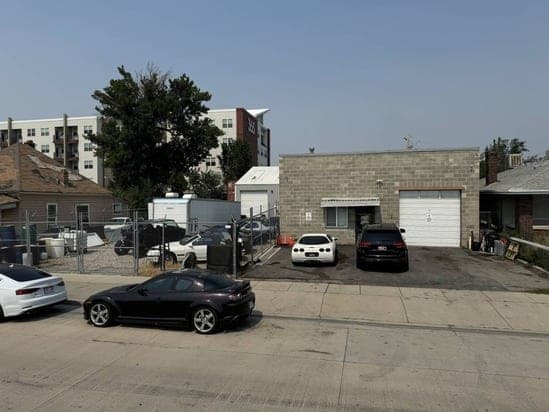
The broker's read
July 2026Nothing industrial has been built downtown in a decade, and nothing is coming. That's the whole story: an older, character-heavy stock in the most central location in the valley, where flex and small warehouse space stays occupied while some of the bigger, more specialized buildings work harder to backfill. For a showroom-plus-shop use, a service fleet, or anyone whose customers are the city itself, downtown space is worth the hunt, and the hunt is real.
By Colter Smith, Commercial Real Estate Agent · CRES Utah
Licensed Utah real estate agent, UT Lic. #12359735-SA00. About Colter
Own property in Downtown?
Get a free broker opinion of value. No listing required. We'll tell you what your property is worth in today's market.
Get a Free ValuationLooking for space in Downtown?
Browse all available listings, filtered and ready. Or tell us your requirements and we'll source off-market options.
Browse Available Listings