
Airport Warehouse & Industrial Space for Lease
The Airport submarket wraps the west and north sides of Salt Lake City around the international airport, and it's the first place I send a distribution tenant before they look anywhere else in the valley. I-80, I-215, and I-15 all converge here, the airport handles your air cargo, and rail is close. Nothing else in Salt Lake puts interstate, air, and rail this tight together with this much modern bulk product. This is the region's big-box logistics address, not a generic industrial pocket.
What's structurally true about the corridor is below. Rate here follows clear height, dock and trailer capacity, and whether your operation actually needs the air-cargo adjacency you'd be paying for. Tell me what you run and I'll tell you what that building should cost. Current availability is on the live Airport listings, and a read on your building is a quick call.
What kind of industrial submarket the Airport area is
Airport is mostly bulk logistics by building area. The rest splits between specialized industrial and a small flex component along the office-adjacent edges near North Temple.
That mix is the one thing people read wrong. Airport's blended asking rent runs below the Salt Lake metro blended, and the lazy read is that Airport is cheaper, so it must be the weaker submarket. It's a mix effect, not a value signal. Bulk logistics is the lowest-cost product type per foot anywhere in the valley, and Airport is mostly bulk logistics. Compare big box to big box and flex to flex, and Airport prices in line with or ahead of comparable metro product on the strength of the location.
So if a broker quotes you the submarket blended number as if it tells you what your specific building should cost, they don't know this corridor. That distinction is worth real money on a lease or a purchase, and it's the first thing I'd correct in most conversations about the Airport.
Why the Airport corridor works for logistics and distribution
Three things happen here at once that no other Salt Lake submarket matches together.
Road. I-80 runs east-west to Wyoming and the West Coast, I-15 runs the Wasatch Front north-south, and I-215 closes the loop around the valley. From a building in this corridor you're on a major interstate in minutes, not after fighting surface streets. For regional distribution out of Salt Lake, that's the whole game.
Air. The international airport is right here, which matters for time-sensitive freight, parts logistics, and any operation where a day of transit is the difference. Most valley industrial can't offer that at all.
Labor. The corridor pulls from the dense west-side and downtown workforce, and the commute geometry works for shift labor. A 3PL or fulfillment operator staffing two or three shifts cares about this as much as the dock count, and it doesn't show up in a rent comp.
Put those together and you see why national distributors and 3PLs treat this as the default Salt Lake address, and why institutional developers keep building here.
Where we work in the Airport corridor
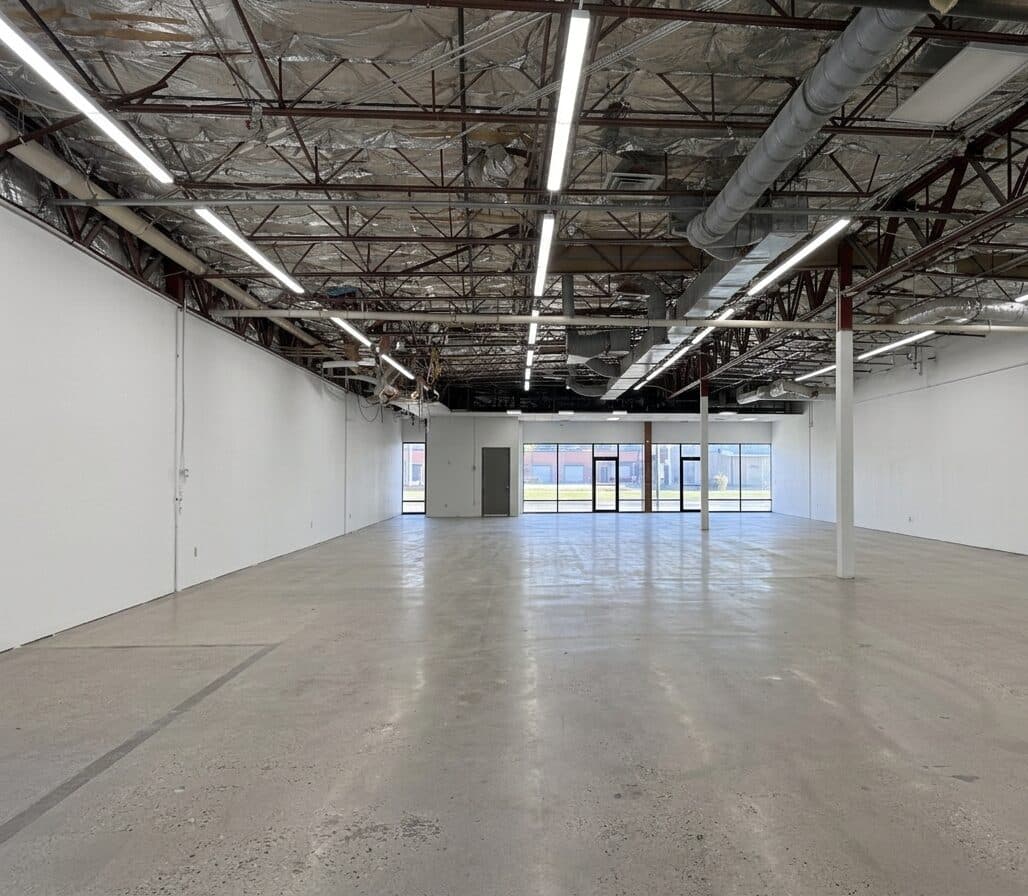
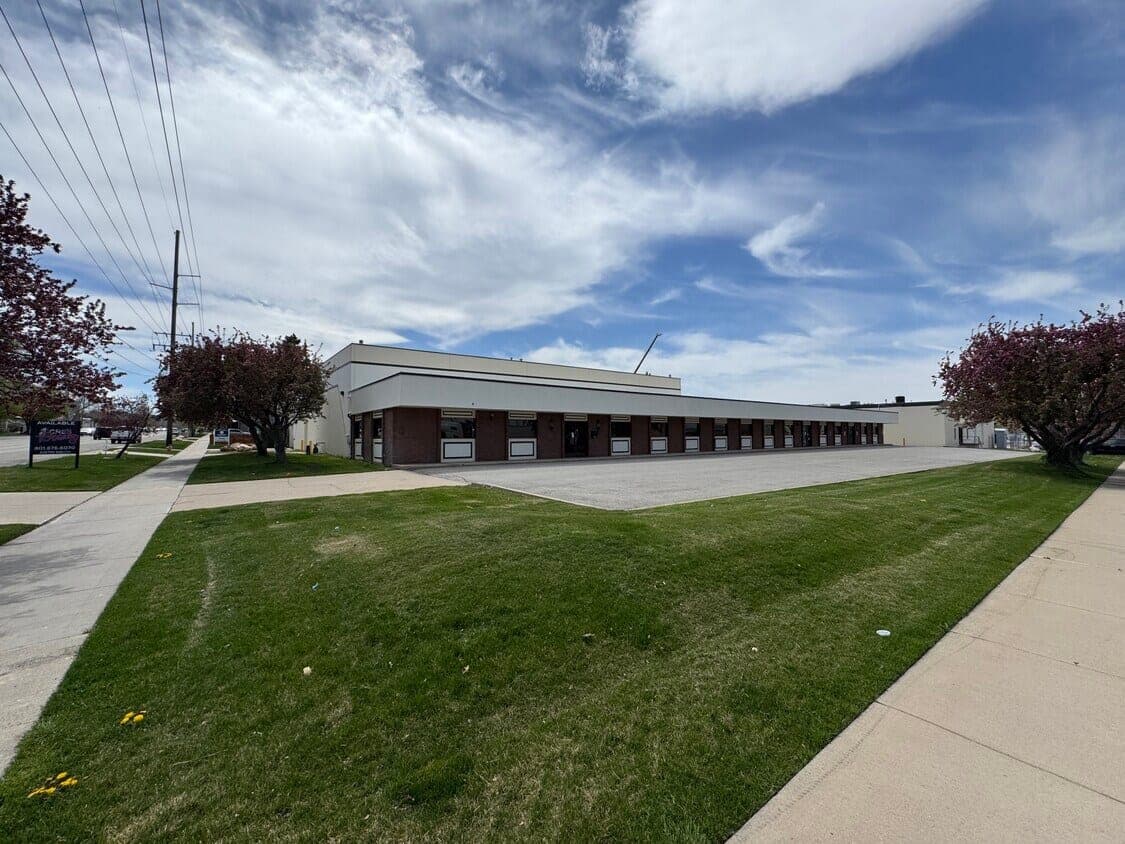
I'd rather tell you where I actually have deals than talk about the corridor in the abstract. CRES represents Airport Business Center, one of our exclusive parks in this submarket, so this is first-hand deal flow right in the corridor. Current availability there sits with the rest of our Airport listings on the live listings page.
The two building stocks in the Airport submarket
Airport runs on two very different inventories, and which one you're in changes the entire deal.
The modern institutional big box, roughly 2018 and newer, is concrete tilt-up, 32 to 36 foot clear, ESFR sprinkler, deep truck courts, heavy trailer parking, and footprints from 100,000 square feet up past a million single-tenant. This is what national distributors and 3PLs come here for, including some of the largest single-tenant fulfillment buildings in the submarket.
The older infill, 1970s and 80s, sits closer in toward North Temple and the Girard and Wright Brothers area. Smaller footprints, 14 to 24 foot clear, often grade-level or limited dock, usually multi-tenant. This is where local and regional tenants under roughly 25,000 square feet actually transact, and it's a thinner, more opportunistic pool that turns over less predictably.
Most of the disappointment I see here traces to one of two mistakes: a tenant wanting modern big-box specs at infill pricing, or an investor underwriting old infill on new-product math. They aren't the same market and they don't trade the same way. Figure out which one your requirement belongs in before you anchor on a number.
Who develops and owns industrial property near the Salt Lake airport
This is institutional ground. Scannell Properties, Hamilton Partners, and Link Logistics all hold real product in the corridor, alongside other national groups. That sets the negotiating bar. You're across the table from well-capitalized owners who know exactly what their space is worth and aren't in a hurry to give it away.
It also means the investment-grade product here is genuinely institutional, priced and traded that way. National capital dominates both the buyer and seller side of recent big-box activity, so if you're an investor expecting value-add pricing on a stabilized box, you generally won't find it on the good buildings.
How new industrial supply gets delivered in the Airport submarket
Airport is the valley's big-box development engine, and supply shows up in lumps, not a steady drip. The corridor absorbed an intense delivery wave from 2022 through 2024, then development slowed hard. New construction concentrates in a handful of large master-planned parks, mainly the 2200 West corridor and the North Creek area, rather than scattered one-off builds.
The practical read: vacancy and effective rent swing on when the next big park delivers, not on a gradual trend line. Time a large requirement against the delivery calendar and you negotiate from a completely different position than the tenant who walked in the quarter a million square feet hit the market empty. That timing is most of the leverage in a big-box deal here, and it's knowable in advance if you're watching what's under construction.
Airport submarket industrial product types compared
| Product type | Typical tenant / use | Building profile | Clear height | Rent tier |
|---|---|---|---|---|
| Bulk logistics / big box | Regional distribution, 3PL, fulfillment | 100K to 1M+ SF, deep dock, trailer parking, ESFR | 32 to 36 ft modern; lower in older stock | Lowest $/SF |
| Specialized industrial | Manufacturing, processing, heavier power | Mid-size, heavier power and structure, some crane | 20 to 28 ft | Mid |
| Flex | Office-heavy users, light assembly, showroom | Small bays, higher finish, more parking | 14 to 18 ft | Highest $/SF |
What I'd tell you before you lease or buy here
Tenants: figure out which of the two building stocks your requirement belongs in before you anchor on a number, and if it's a large requirement, time it against the big-box delivery calendar. That's where the leverage is, and most tenants leave it on the table because nobody told them to look.
Owners of older infill: you're not competing with the institutional big box for the same tenant, so don't price or position like you are. Your edge is the smaller, faster, closer-in deal the big parks can't economically serve. Lean into that.
Investors: the institutional product here trades as long-term single-tenant net lease and sale-leaseback deals, with national capital on both sides. Your cap rate turns on which building you're buying. A stabilized modern box and an older multi-tenant infill building don't price alike, and financing costs move both. Tell me the asset and I'll tell you where it clears today. Call me.
Common questions
Why is the Airport submarket's average asking rent lower than the Salt Lake metro average? Because the submarket is mostly bulk logistics, the lowest-cost industrial product type per foot anywhere in the valley. The blended average gets dragged down by product mix, not by the location being weak. Compare like product to like product and Airport holds up against or beats comparable metro space.
What clear heights do warehouses in the Airport submarket have? It depends on vintage. Modern big-box, roughly 2018 on, runs 32 to 36 foot clear. Older infill from the 1970s and 80s runs 14 to 24 feet. If clear height matters to your operation, the building's era tells you most of what you need before you walk it.
Is the Airport submarket good for distribution and 3PL operations? It's the best in the valley for it. Interstate access on I-80, I-15, and I-215, the international airport for time-sensitive freight, a workable labor draw for multi-shift staffing, and the deepest pool of modern big-box product in the metro. For regional distribution out of Salt Lake, it's the default for a reason.
What size industrial spaces does the Airport submarket have? Both ends. Modern single-tenant big-box from 100,000 square feet up past a million, and older multi-tenant infill where most deals under about 25,000 square feet happen. The mid-range is real but thinner. What you can find depends on which of the two stocks fits your requirement.
How does the Airport submarket compare to other Salt Lake submarkets? Airport is the logistics and big-box specialist. California Avenue, its neighbor to the south, competes head-to-head for modern boxes on its western half but spans far more product types. West Valley skews to a different building age and tenant profile. If you don't need airport access, Bluffdale-Riverton trades the location for newer land and lower pricing at the south end. See the Salt Lake City corridors and all Salt Lake Valley submarkets.
What does industrial space in the Airport submarket cost to lease or buy? The building decides this, far more than the Airport label. A modern box with 32 to 36 foot clear, a deep truck court, ESFR, and heavy trailer parking rents on a different plane than a 1970s North Temple infill bay at 14 to 24 feet with grade-level loading. Whether you actually need air-cargo adjacency moves it again. Tell me the spec and I'll tell you where that kind of building is trending, plus what's open right now: live listings or call me.
Is there warehouse space for rent near me in the Airport submarket? If you are searching near the airport, what is open splits by which of the two stocks you need. Modern single-tenant big-box runs from 100,000 square feet up past a million, and the older multi-tenant infill along North Temple is where most deals under about 25,000 square feet land. Current Airport listings show what is available this week, and I will tell you which stock your requirement belongs in before you tour anything.
Have a requirement or a building in the Airport corridor? Give me a call and I'll tell you which of the two stocks you belong in and where the leverage sits. Contact Colter
Colter Smith, CRES Utah · saltlakewarehouses.com
By Colter Smith, Commercial Real Estate Agent · CRES Utah
Available Space in Airport
1 listing available now
Current asks in Airport: $0.90 per SF per month, from our live listings, September 2026.
More CRES Industrial Listings
Industrial and flex listings from other CRE Specialists agents. Each inquiry goes directly to the listing agent.
The broker's read
July 2026The airport corridor built more big-box space in three years than anywhere in Utah, and it's still digesting. That part of the story doesn't touch small and mid-bay users much: the sub-10,000 SF product out here stays tight because nobody built any of it during the boom. Location does the permanent work: I-80, I-215, rail, and the airport itself make this the corridor time-sensitive operations refuse to leave. Our Airport Business Center suites are minutes from the terminal, and that sentence does most of the selling.
By Colter Smith, Commercial Real Estate Agent · CRES Utah
Licensed Utah real estate agent, UT Lic. #12359735-SA00. About Colter
Nearby Submarkets
Own property in Airport?
Get a free broker opinion of value. No listing required. We'll tell you what your property is worth in today's market.
Get a Free ValuationLooking for space in Airport?
Browse all available listings, filtered and ready. Or tell us your requirements and we'll source off-market options.
Browse Available Listings