
West Jordan Warehouse & Industrial Space for Lease
West Jordan is where the south valley does SMB-to-mid-market distribution, and it's usually the right answer for a modern-specs requirement in the 20,000 to 150,000 SF range that doesn't want to pay the Airport premium. The submarket runs along the Bangerter Highway corridor between roughly 6200 South and 10000 South, with I-15 on the east edge and the Mountain View Corridor cutting the western half. The geography pulls from West Jordan proper plus a slice of South Jordan along the shared border, with industrial clustered on Bangerter, the 7800 South corridor, and the parks pushing west toward Mountain View. West Jordan is one of five cities in the South Valley.
What space rents or sells for moves month to month, so current West Jordan availability is on the live listings and a read on your building is a quick call.
What kind of industrial submarket West Jordan is
West Jordan is the modern-spec SMB and mid-market submarket. The inventory runs meaningfully newer than the central-valley submarkets, median year built 1998 against Sandy's 1994, Midvale's 1982, Murray's 1984, and South Salt Lake's 1975, with a real Class A presence (26 buildings) and a deeper Class B core (115 buildings). The size profile is the second fact: median around 13,000 SF, but with inventory all the way up past 100,000 SF, so a tenant can grow inside West Jordan without changing submarkets.
Ownership tells you what it isn't. There's no Boyd Enterprises or Harrison Properties equivalent running the building count. The top owners are smaller in concentration and more operator-side, and they include Aligned Data Centers as a real data-center owner with multiple buildings, over a long tail of private investors and operator-owners. Institutional capital is present but not concentrated.
The one thing West Jordan gets read wrong on is the comparison to the Airport. The temptation is to call it Airport without the airport premium, but that misses what fits each. The Airport is the institutional big-box specialist for operations that need airport access and run 200,000 SF and up. West Jordan is the modern-specs submarket for the 20,000 to 150,000 SF tenant who wants modern specs without paying for airport adjacency. Treat them as substitutes and you'll run a wrong-submarket search.
Why the West Jordan corridor works for SMB and mid-market distribution
Three things make West Jordan work for what it actually is.
Freeway geometry. Bangerter Highway (SR-154) runs the east-west spine, the Mountain View Corridor (SR-85) cuts the western flank, and I-15 is the east edge. From most West Jordan addresses you're inside fifteen minutes of two major arterials and under thirty from I-80 and the airport. The geometry isn't airport-centric, but it covers the metro and the regional flows well.
Scale flexibility. The submarket carries modern product from 20,000 SF up past 150,000, the sweet spot for SMB distribution, regional 3PL, and mid-market manufacturers. Tenants growing out of older central-valley product (Sandy, Murray, South Salt Lake) land here because the next tier of modern specs in their size range is West Jordan, not the Airport. Tenants downsizing from oversized Airport product land here for the same reason.
Labor draw. West Jordan and South Jordan together carry a workforce that supports multi-shift logistics, pulling from west-side and south-valley labor that other submarkets don't reach as directly. For an operation staffing two or three shifts, that's a durable advantage.
The building stocks in West Jordan
The inventory breaks into two main stocks with a smaller third.
The 1980s-through-1990s mid-market industrial. Concrete tilt-up, footprints typically 20,000 to 75,000 SF, modest dock counts, clear heights in the low-to-mid 20s. This is the largest stock by count and fills most of the eastern and central geography. Class B dominates, and tenants are regional distribution, light manufacturing, contractors, and mid-market service.
The modern institutional-adjacent product, mostly 2018 and newer, concentrated in the parks pushing west along Bangerter toward Mountain View. Concrete tilt-up, 28 to 32 foot clear, ESFR, modern truck courts, footprints from 50,000 SF up past 200,000. Class A and high-grade B. Aligned Data Centers shows up here alongside the broader institutional pipeline.
The half-stock is older small-bay infill, 1960s and 70s, smaller footprints, lower clear heights, often grade-level, concentrated along the older arterials inside West Jordan proper. It's a minority of the count but serves the local trades.
Most of the disappointment I see in West Jordan traces to underwriting one stock on another's comps. The modern western product doesn't price like the older eastern infill, and the reverse.
Who owns and develops in West Jordan
Ownership is mixed and dispersed, the top of the leaderboard running to about three buildings per owner rather than the double-digit concentrations in West Valley or California Avenue. Aligned Data Centers holds the data-center inventory along Bangerter, alongside private operators like Ferrus Industries, Schafer Magana, the Colmena Group, and Jones Excavating. On development, the western parks carry a modest but active institutional pipeline, with names like Pacific Commercial Properties, Skanska, and Big-D Construction among them, at a pace slower than the Airport but steadier than the central-valley submarkets.
For a tenant, you'll usually be across the table from a private operator-owner or a smaller institutional landlord, not a national REIT, and negotiating posture varies with that. For an investor, the bid pool is genuinely mixed: modern Class A trades to institutional capital, the broader stock to private investors and operator-users.
How new supply gets delivered in West Jordan
West Jordan delivers new supply mostly in the western parks along Bangerter toward Mountain View. The pace is steadier than the Airport (which delivers in lumpy waves) and the concentration is meaningful but not dominant. The eastern half essentially doesn't add supply; it turns over on tenant rollover and owner-occupant moves.
Vacancy and effective rent in the modern western product move with that western-parks delivery calendar, while the older eastern stock follows its own pattern. Time a large modern requirement against what's under construction on the western Bangerter corridor and you negotiate from a better spot. West Jordan still has developable land in the western half, less than Bluffdale-Riverton but real, so the pipeline can keep delivering, which keeps the modern stock competitive.
West Jordan industrial product types compared
| Product type | Typical tenant / use | Building profile | Clear height | Rent tier |
|---|---|---|---|---|
| Bulk logistics / big box | SMB-to-mid-market regional distribution, 3PL, fulfillment | 50K to 200K+ SF modern western; older big-box 30K-100K, shallower specs | 28 to 32 ft modern; 20 to 26 ft older | Lowest $/SF |
| Specialized industrial | Manufacturing, fabrication, data centers, contractors and trades | Mid-size single or multi-tenant, sometimes specialized power and structure | Roughly 22 to 28 ft | Mid |
| Flex | Office-heavy users, light assembly, showroom & service, professional trades | Smaller bays, higher finish, more parking | Roughly 14 to 18 ft | Highest $/SF |
What I'd tell you before you lease or buy here
Tenants: this is the right submarket for SMB-to-mid-market modern distribution and manufacturing, especially 20,000 to 150,000 SF. The western parks carry modern specs at better pricing than comparable Airport product, with the trade-off that you don't get airport adjacency. If your operation doesn't need the airport, that's a structural advantage. If your requirement is under 20,000 SF, you may find better value in the central-valley submarkets where small-bay is concentrated; West Jordan carries small-bay, but it isn't the strength.
Owners: your edge depends on which stock you're in. The modern western product competes against itself plus comparable Airport and California Avenue product on institutional terms. The older eastern product competes locally for tenants who want West Jordan without modern specs. Don't price older Class C like modern Class A, and don't underbuild modern western product against the regional pipeline.
Investors: recent sales here split about evenly between investors and owner-users, unusual for a submarket with West Jordan's modern profile. The buyer pool is genuinely mixed, and it changes the underwriting building by building. Clear height, dock count, truck court depth, and the age of the box drive the cap rate far more than the address, and rates move it quarter to quarter. Tell me the box you're underwriting and I'll tell you where it's pricing. Call me.
Common questions
How does West Jordan industrial rent compare to other Salt Lake submarkets? West Jordan runs roughly at or modestly below the metro blended per foot, with the modern western product pricing in line with comparable mid-market product across the valley and the older eastern stock running below. Against Airport modern big-box, West Jordan usually runs at a discount because there's no airport-access premium baked in. Current availability is on the live listings. Call me with clear height and dock count.
What clear heights will I find in West Jordan? The modern western product runs 28 to 32 feet, with a handful higher. The 1980s-through-1990s mid-size product runs 20 to 26. Older eastern infill runs 14 to 22. Modern logistics heights of 32 feet and up exist in the modern stock but are less concentrated than at the Airport or California Avenue's western half.
Is West Jordan good for distribution or 3PL? Yes, especially for SMB-to-mid-market distribution in the 20,000 to 150,000 SF range. The modern western product carries the specs and the freeway access for regional distribution and 3PL that doesn't require airport adjacency. For airport-dependent freight, the Airport is structurally better. For very large institutional big-box, the Airport and California Avenue's western half are deeper.
What size spaces does West Jordan have? The full range, with concentration in the mid-market. Median around 13,000 SF, but inventory extends past 200,000 SF at the institutional end. SMB-to-mid-market tenants have the deepest pool. Very small (under 5,000 SF) and very large (over 200,000 SF) requirements have thinner inventory here than elsewhere.
How does West Jordan compare to South Jordan, Bluffdale-Riverton, Sandy, and the Airport? South Jordan is the border twin to the south, the newer and thinner slice of the same Bangerter corridor. Bluffdale-Riverton sits farther south with newer big-box at south-end pricing and more distance from the core. Sandy is the east-side neighbor running older small-bay infill. The Airport is the institutional big-box specialist for tenants who need airport access. See the parent South Valley hub and all Salt Lake Valley submarkets.
What does West Jordan space cost to lease or buy? The number is a function of the box, not of the West Jordan name. An eastern tilt-up from the early 1990s with low-20s clear and a couple of docks reads very differently from a 2018-and-newer western-parks box with 32-foot clear, ESFR, and a full row of docks, even at the same size. That gap is spec and vintage, not geography. Give me the clear height and dock count you need and I'll show you where that shakes out, plus what's available: live listings or call me.
Is there warehouse space for rent near me in West Jordan? Yes, and the mid-market pool is the deepest part of it. West Jordan runs along the Bangerter Highway corridor with a median building around 13,000 SF and inventory extending past 200,000 SF at the institutional end, so SMB-to-mid-market requirements have the most to choose from. Under 5,000 SF and over 200,000 SF are both thinner here than elsewhere in the valley. Current West Jordan listings show the real pool.
Have a requirement or a building in the West Jordan corridor? Call me and I'll tell you what the box is worth and where the leverage sits on the delivery calendar. Contact Colter
Colter Smith, CRES Utah · saltlakewarehouses.com
By Colter Smith, Commercial Real Estate Agent · CRES Utah
Available Space in West Jordan
2 listings available now
Current asks in West Jordan: $1.05 per SF per month, from our live listings, October 2026.
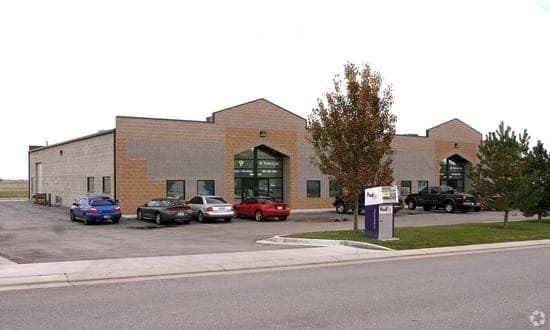
Freestanding Industrial: 4268-4272 W Nike Dr
West Jordan, UT
Listed/Updated October 2026
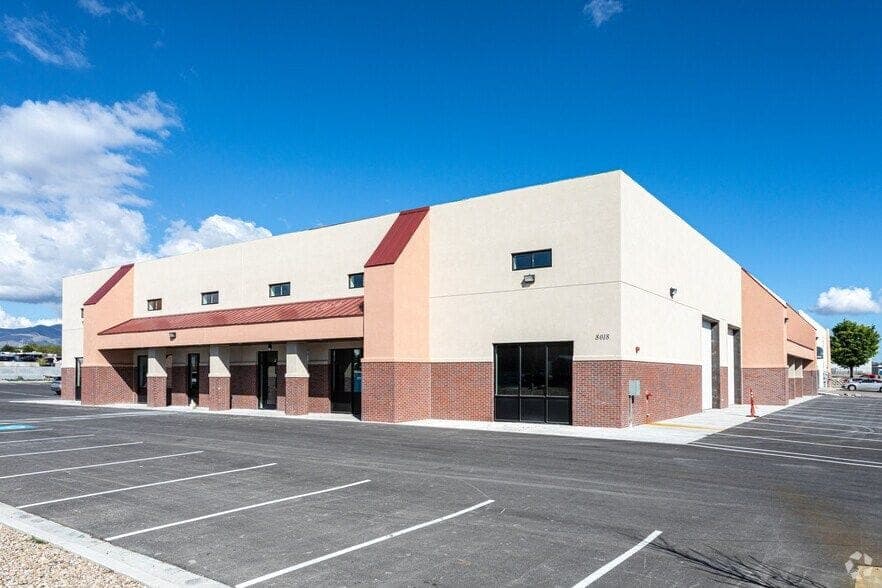
Industrial Condo for Sale: 8018 S Welby Park Dr, West Jordan
West Jordan, UT
Listed/Updated September 2026
The broker's read
July 2026West Jordan is where new product is actually getting taken. Deliveries keep coming and the market keeps filling them, which is not what most of the valley looks like this year. Flex space here is effectively spoken for. Our crane-served building on Nike Drive drew exactly the kind of tenant interest that explains why: heavy-power, mid-size product in this corridor has no real substitute. Growth corridor, and acting like it.
By Colter Smith, Commercial Real Estate Agent · CRES Utah
Licensed Utah real estate agent, UT Lic. #12359735-SA00. About Colter
Own property in West Jordan?
Get a free broker opinion of value. No listing required. We'll tell you what your property is worth in today's market.
Get a Free ValuationLooking for space in West Jordan?
Browse all available listings, filtered and ready. Or tell us your requirements and we'll source off-market options.
Browse Available Listings